The Saturday Morning Post – The Wilderness Of Sin
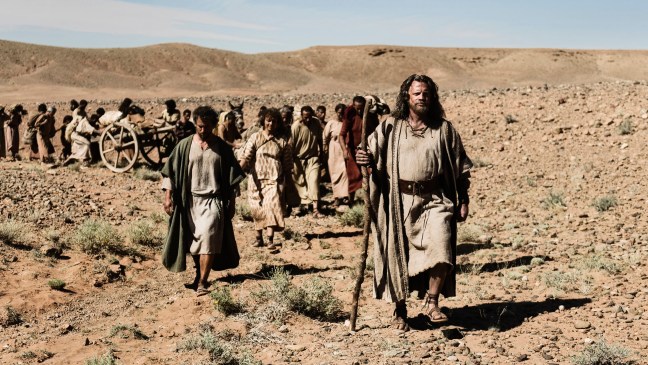
Today’s Passage – Exodus 16 – 18 (Click on the references to listen to the audio – Click here to view the passage from Blue Letter Bible)
(Second Milers also read – Luke 5 – 6; Proverbs 25; Psalms 121 – 125
Read the “0125 Evening and Morning“ devotion for today, by the late Charles Haddon Spurgeon.
“And they took their journey from Elim, and all the congregation of the children of Israel came unto the wilderness of Sin, which is between Elim and Sinai, on the fifteenth day of the second month after their departing out of the land of Egypt.” (Exodus 16:1)
Good morning. Did you know Sin was a real place? It’s located between Elim and Sinai. Sin is a real place: we wander around in it all the time. It’s not a fun place to be. It’s an easy place to get to, but sometimes a very hard place to get out of. And Israel was faced with the wilderness of Sin right in front of them. And they stepped into Sin.
“And the whole congregation of the children of Israel murmured against Moses and Aaron in the wilderness: And the children of Israel said unto them, Would to God we had died by the hand of the LORD in the land of Egypt, when we sat by the flesh pots, and when we did eat bread to the full; for ye have brought us forth into this wilderness, to kill this whole assembly with hunger.” (Exodus 16:2-3)
As soon as they entered the wilderness of Sin, the sin started. The children of Israel murmured about those in charge. You blame them or others for your troubles, but it was your walk into Sin. So, number 1, Sin brings Sedition.
Number 2, Sin does not bring Satisfaction. When all of Israel were in Sin they were hungry. Sin does not satisfy, and that added to their sedition.
1) Sin brings Sedition
2) Sin does not bring Satisfaction
And thirdly, Sin brings Sacrilege…
“And Moses said, This shall be, when the LORD shall give you in the evening flesh to eat, and in the morning bread to the full; for that the LORD heareth your murmurings which ye murmur against him: and what are we? your murmurings are not against us, but against the LORD.” (Exodus 16:8)
Israel did not have to murmur. Israel did not have to walk around hungry. Israel did not have to blaspheme God. But they did. And God loved them enough that He took care of their needs by giving them quail, and manna to eat. They didn’t have to do all those things. All they had to do was ask God and He would have fulfilled their needs.
“But my God shall supply all your need according to his riches in glory by Christ Jesus.” (Philippians 4:19)
Just ask…
“For whosoever shall call upon the name of the Lord shall be saved.” (Romans 10:13)
The next time you decide that you want to take a walk in the wilderness of Sin: DON’T! Just remember…
1) Sin brings Sedition
2) Sin does not bring Satisfaction
3) Sin brings Sacrilege
Peace.
Posted in Devotions by Pastor Ted Stahl with no comments yet.
Moving Forward

Today’s Passage – Exodus 13 – 15 (Click on the references to listen to the audio – Click here to view the passage from Blue Letter Bible)
(Second Milers also read – Luke 3 – 4; Proverbs 24; Psalms 116 – 120)
Listen to this morning’s Scripture Song – Isaiah 51:11
Read the “0124 Evening and Morning“ devotion for today, by the late Charles Haddon Spurgeon.
Read previous posts from this passage – “He Brought Us This Far” and “Quit Griping!“
“15 And the LORD said unto Moses, Wherefore criest thou unto me? speak unto the children of Israel, that they go forward:” (Exodus 14:15)
In Exodus 14, the Israelites are heading out of Egypt through the wilderness and eventually into the Promised Land of Canaan. God had just miraculously delivered them from the bondage of slavery in Egypt through a series of divine judgments (plagues) culminating with the death of every firstborn person and even animal of the Egyptians. Pharaoh, the king of Egypt, finally had enough and agreed to let the Israelites leave. However, Pharaoh has a change of heart and decides that he is going to pursue after the Israelites with his army and trap them on the shore of the Red Sea.
The people of God were once again very afraid and their fear affected their faith in God:
“10 And when Pharaoh drew nigh, the children of Israel lifted up their eyes, and, behold, the Egyptians marched after them; and they were sore afraid: and the children of Israel cried out unto the LORD. 11 And they said unto Moses, Because there were no graves in Egypt, hast thou taken us away to die in the wilderness? wherefore hast thou dealt thus with us, to carry us forth out of Egypt? 12 Is not this the word that we did tell thee in Egypt, saying, Let us alone, that we may serve the Egyptians? For it had been better for us to serve the Egyptians, than that we should die in the wilderness.” (Exodus 14:10-12)
Moses assures the people that God was going to deliver them once again:
“13 And Moses said unto the people, Fear ye not, stand still, and see the salvation of the LORD, which he will shew to you to day: for the Egyptians whom ye have seen to day, ye shall see them again no more for ever. 14 The LORD shall fight for you, and ye shall hold your peace.” (Exodus 14:13-14)
It is interesting that Moses told the people to “stand still,” but God breaks into the conversation Himself and tells the people to “go forward:”
“15 And the LORD said unto Moses, Wherefore criest thou unto me? speak unto the children of Israel, that they go forward:” (Exodus 14:15)
But where were they going to go? They were pinned up against the waters of the Red Sea. God put a wall of separation between the army of Israel and people of God (vs. 19 – 20), and then God parted the waters of the Red Sea so that the Israelites could pass through on dry land, and once they were safely on the other side, God closed up the waters again and drowned the Egyptian army that attempted to follow them.
Though the people of God were fearful, they moved forward in faith, which caused God to bring them the victory. Then Moses and the Israelites were singing:
“1 Then sang Moses and the children of Israel this song unto the LORD, and spake, saying, I will sing unto the LORD, for he hath triumphed gloriously: the horse and his rider hath he thrown into the sea. 2 The LORD is my strength and song, and he is become my salvation: he is my God, and I will prepare him an habitation; my father’s God, and I will exalt him.” (Exodus 15:1-2)
There would be many more challenging moments for the people of God in their future as they wandered through the wilderness on their way to the Land of Promise and each time they had a choice: were they going to allow their fear to cripple their faith or were they going to move forward?
The theme for our church in 2024 was “moving forward.” We have experienced many obstacles in our past that God has gotten us through and I am quite sure there will also be many more obstacles, no doubt more challenging obstacles in our future, but I am also quite sure that as long as we keep moving forward by faith, God will bring us through them all.
Posted in Devotions by Phil Erickson with 3 comments.
Do I Have Your Attention?

Today’s Passage – Exodus 10 – 12 (Click on the references to listen to the audio – Click here to view the passage from Blue Letter Bible)
(Second Milers also read – Luke 1 – 2; Proverbs 23; Psalms 111 – 115)
Listen to this morning’s Scripture Song – Isaiah 40:31
Read the “0123 Evening and Morning“ devotion for today, by the late Charles Haddon Spurgeon.
Read previous posts from today’s passage in Exodus – “Your Free To Go” and “What Can Wash Away My Sin?“
“And Pharaoh rose up in the night, he, and all his servants, and all the Egyptians; and there was a great cry in Egypt; for there was not a house where there was not one dead. And he called for Moses and Aaron by night, and said, Rise up, and get you forth from among my people, both ye and the children of Israel; and go, serve the LORD, as ye have said. Also take your flocks and your herds, as ye have said, and be gone; and bless me also. And the Egyptians were urgent upon the people, that they might send them out of the land in haste; for they said, We be all dead men.” – (Exodus 12:30-33)
Flies, frogs, locusts, darkness, hail. All of these and more sent by the hand of God in order that the Egyptians, as well as the Israelites, would know that there is an awesome and powerful God in Heaven. God’s command to the king of Egypt was simple: “let my people go.” However, Pharaoh was not too willing to heed the request of God. He seemed to be more willing to endure all of the plagues that God was sending his way. That is, all until his first born son was taken from him at the hand of God. God finally got his attention. He was finally ready to yield his stubborn will to the will of God.
There was a lot to think about in the passages of Scripture that we read this morning and I understand that there are deeper theological truths behind the hardness of Pharaoh’s heart, but I couldn’t get past the thought that sometimes God has to allow some especially painful things in our lives in order to get our attention. We are sometimes like that hard clay that the potter must soften before he can use it. I’m just wondering this morning, is there something that the Lord has been trying to do in your life that you have been resisting? Have you hardened yourself to the point, where in order for God to accomplish His will, He will have to break you? What will God have to do to get your attention? I suppose this thought applies just as much to the Christian that is fighting against God’s perfect will as it does to the lost person that is resisting salvation. Whichever your case is, the remedy is the same: soften your heart and yield to God’s will. Is there some sin that you are holding on to? God will do what He has to do in order to get you to repent of it and forsake it. Whatever it takes, God will accomplish His will for your life. You cannot win in a battle with God.
When the Apostle Paul was gloriously saved, the Lord said to him: “it is hard for thee to kick against the pricks” (Acts 9:5b). A “prick” ( κέντρα from κέντρον – kentron) was an iron and spiked goad or stick used for herding cattle. The Lord was saying that Paul was fighting a losing battle in resisting the Him and fighting against what God was doing in those early days of Christianity, and what He was doing personally in Paul’s life. Is it possible that you are kicking against the pricks in something that God is trying to do in your life?
[Edited 012325]
Posted in Devotions by Phil Erickson with 8 comments.
Sin Stinks

Today’s Passage – Exodus 7 – 9 (Click on the references to listen to the audio – Click here to view the passage from Blue Letter Bible)
(Second Milers also read – Mark 15 – 16; Proverbs 22; Psalms 106 – 110)
Listen to this morning’s Scripture Song – Proverbs 27:15
Read the “0122 Evening and Morning“ devotion for today, by the late Charles Haddon Spurgeon.
Read a previous post from this passage – “Did Pharaoh have a Choice?“
“And the fish that was in the river died; and the river stank, and the Egyptians could not drink of the water of the river; and there was blood throughout all the land of Egypt.” (Exodus 7:21)
“And they gathered them together upon heaps: and the land stank.” (Exodus 8:14)
There are a few thoughts that came to mind from these three chapters of Scripture this morning. First, notice in the above verses the results of the first two plagues upon the people of Egypt. These plagues were delivered by God to the people of Egypt through Moses because the Egyptians had enslaved the children of Israel and had flatly refused to submit to God and then let them go. In the first plague, the waters of the Nile River and then all of the fresh water sources were turned to blood, killing all of the fish. In the next plague, the frogs came out of the water in droves and covered the land and even got into people’s homes. Notice also in Exodus 8:7, the “brilliant” Egyptians magicians while trying to prove that they had just as much power as God did, duplicated the plague, producing even more frogs and complicated the problem even more for the people of Egypt.
When God finally called off the plague, the frogs died. They gathered all of the dead frogs and piled them up “in heaps.” All of this death that was result of these initial plagues caused Egypt to stink. Here we see that the wages of Pharaoh’s sin not only caused a lot of death in Egypt, but it also caused a very unpleasant stench. There would be more death to come as well as many cattle would die (Exodus 9:6) as well as many other “men and beasts” (Exodus 9:26). Sin produces all sorts of negative results. Sin stinks! It causes nothing but devastating and unpleasant consequences for everybody involved.
Another thought that came to mind from this passage is that the magicians who worked for Pharaoh did have power, but their power was limited. They could imitate some of the miracles that God wrought through Moses (Exodus 7:11), but most of them they could not. The magicians were also powerless to undo what God had done, and even acknowledged to Pharaoh the far superior power of God.
“And the magicians did so with their enchantments to bring forth lice, but they could not: so there were lice upon man, and upon beast. Then the magicians said unto Pharaoh, This is the finger of God: and Pharaoh’s heart was hardened, and he hearkened not unto them; as the LORD had said.” (Exodus 8:18-19)
“And the magicians could not stand before Moses because of the boils; for the boil was upon the magicians, and upon all the Egyptians.” (Exodus 9:11)
The devil is certainly a very shrewd and powerful being, but he “ain’t got nothin’ on God.” God is infinite in everything He is, including in power. If you want to be on the team that doesn’t “stink,” and wins every time, you will want to be on God’s team.
Posted in Devotions by Phil Erickson with 6 comments.
Expect Opposition

Today’s Passage – Exodus 4 – 6 (Click on the references to listen to the audio – Click here to view the passage from Blue Letter Bible)
(Second Milers also read – Mark 13 – 14; Proverbs 21; Psalms 101 – 105
Listen to this morning’s Scripture song – 1 John 4:7 & 8
Read a previous post from this passage – “What’s Your Excuse“
Read the “0121 Evening and Morning“ devotion for today, by the late Charles Haddon Spurgeon.
“And they met Moses and Aaron, who stood in the way, as they came forth from Pharaoh: And they said unto them, The LORD look upon you, and judge; because ye have made our savour to be abhorred in the eyes of Pharaoh, and in the eyes of his servants, to put a sword in their hand to slay us. And Moses returned unto the LORD, and said, Lord, wherefore hast thou so evil entreated this people? why is it that thou hast sent me? For since I came to Pharaoh to speak in thy name, he hath done evil to this people; neither hast thou delivered thy people at all.” – (Exodus 5:20-23)
Moses did exactly what God had called him to do. He went to the people of Israel and convinced them that God had told him to deliver them out from under the bondage of the Egyptians. He then went to Pharaoh and demanded on behalf of God to let the people of God leave. However, things did not work out exactly the way Moses thought they would. Instead of things getting better, in the short term, things actually took a turn for the worse. Not only did Pharaoh refuse to let the people go, he also made their jobs harder by making them gather their own straw for the bricks that they had to make for their labor. Pharaoh was mad at the people, the people were mad at Moses, and Moses was mad at God.
Notice the opposition that Moses faced in the will of God:
1 He had opposition from without the congregation. I guess Pharaoh could be symbolic of the devil. The devil will vehemently oppose anyone that seeks to do the will of God.
2 He also faced opposition from within the congregation of Israel. They were all for God’s plan until their life got uncomfortable, then they wanted to go back. Many Christians today are the same way. They claim to love the Lord, and want to do His will, but when it begins to cost them something, they will often quit.
3 Notice also that Moses faced opposition from within himself. When the pressure was on him, he began to second guess the will of God.
Nobody ever said that the road was going to always be easy. You can take to the bank the fact that opposition will come to those who are doing the will of God. But you can also count on the fact that God will always bring His victory, if we will just stick with the plan and not quit.
Posted in Thoughts from Exodus by Phil Erickson with 2 comments.
The Call of God

Today’s Passage – Exodus 1 – 3 (Click on the references to listen to the audio – Click here to view the passage from Blue Letter Bible)
(Second Milers also read – Mark 11 – 12; Proverbs 20; Psalms 96 – 100)
Listen to this morning’s Scripture Song – Psalm 121
Read the “0120 Evening and Morning“ devotion for today, by the late Charles Haddon Spurgeon.
Read a previous post from this passage – “Growing Through Affliction“
“And when the LORD saw that he turned aside to see, God called unto him out of the midst of the bush, and said, Moses, Moses. And he said, Here am I.” (Exodus 3:4)
Forgive me for reminiscing a little this morning, but when I read this passage of Scripture dealing with the call of God to Moses, I cannot help but remember the times that I heard clearly the voice of God as He was directing my life. The times that I will share with you happened after I had already trusted Christ as my Saviour, and after I was also already serving Him and growing in Him the best I knew how through my local church. Notice in the passage that Moses also had to get close to God in order for him to hear God’s call.
The first time in my life that I felt God call me was when I was attending a evening service back at Ocean County Baptist Church many years ago. I was probably 25 years old at the time and had only been a Christian at that point for a short while. Anyway, we had a guest missionary speaker that night. I must confess that I do not remember the preacher’s name, or the place where he was a missionary. I don’t even remember his message title or text. What I do remember, however, was his invitation. It went something like this: “If God were to call you to do something, and He were to make it clear to you that it was His will, would you surrender?” To me, that was a no brainer. The man was not asking me to surrender to some specific place or ministry at that moment; he was merely posing the possibility of a call, and asking what my response would be. I went forward, and frankly I thought the entire congregation would have walked the aisle with me; but when I got up after praying, I was shocked to see that there were only two of us up at the front. At that time in my life, I had no idea what God might do with me, but I told Him that night that I was willing to go “if” He were to call me. I often think back on that moment as the beginning point of God directing me to where I am today.
The second time, I heard God’s call clearly was when He called me to go to Bible College. I had already been to college once and had a degree in business administration, and I was perfectly content with just serving with my pastor at my home church while I learned what I needed to know there. I remember my pastor and I agreeing that I should take some correspondance classes so that I would not have to uproot my family and go off to school. God, however, had other plans. While I was attending a conference down in Longview, Texas, God revealed clearly that He wanted me to be trained at Texas Baptist College (now Texas Independent Seminary). I do not regret that move for one minute. God taught me much there, but the main thing that He taught me was how to trust Him.
The third time I heard the voice of God in my life was when God called me to be the pastor of Jersey Shore Baptist Church. I never candidated at any other church. I really didn’t even candidate here. God, through a very miraculous set of circumstances placed me here. That was over twenty-one years ago now and one thing is for sure, knowing that I was genuinely “called of God” has been the thing that has kept me going for all these years. There have been many blessings along the way, and there have also been some difficult days; but I know that I am exactly where God wants me. The certainty of God’s call is what helps keep me going.
What is God calling you to do? Maybe He has called you to do something in the past and you have not heeded that call. the Bible tells us “the gifts and calling of God are without repentance” (Romans 11:29). God has not changed his mind about His call on your life; He is just waiting for you to surrender to that call.
Posted in Devotions by Phil Erickson with 5 comments.
Graduation Day

Today’s Passage – Genesis 48 – 50 (Click on the references to listen to the audio – Click here to view the passage from Blue Letter Bible)
(Second Milers also read – Mark 9 – 10; Proverbs 19; Psalms 91 – 95)
Listen to this morning’s Scripture Song – Psalm 119:105
Read the “0119 Evening and Morning“ devotion for today, by the late Charles Haddon Spurgeon.
“And Jacob called unto his sons, and said, Gather yourselves together, that I may tell you that which shall befall you in the last days.” (Genesis 49:1)
I remember when I was a young person attending school. At the end of every school year there was an awards ceremony and they would give out various awards for attendance, academics, athletics, and even some for attitude. I didn’t receive many awards as a child, I was what you might call “exceedingly average” in just about every area. Looking back on my school days, I can only recall receiving three awards: two in intermediate school, and one in college (the first time I went to college – not Bible school). However, I remember that every time I attended one of those awards ceremonies, or a commencement exercise, I would always feel two things. First, I would feel regret for not having applied myself more that year. I would realize that I could and should have done more; I should have worked harder; I shouldn’t have goofed off so much, wasting valuable time. The second thing that I would feel is motivated. I would determine that next year was going to be different for me; next year I was going to do better; next year I would be up there on the stage getting some kind of award. The only problem was that my weaknesses in character always outlasted my bursts of motivation.
You may be wondering right now what all of this has to do with the passage that we read in Genesis this morning. Well, here is the connection. Every time I read chapter 49 in Genesis, I am reminded of these award ceremonies. Except, here it is the one who is graduating to Heaven that is handing out the awards. Jacob is about to die, and he calls all of his children together to pronounce a blessing upon some. Unfortunately, he also will be pronouncing a curse upon others. Can you imagine the last words that you hear out of your father’s mouth before he dies being words of regret, rather than words of praise. I know well what it feels like trying to live a life that is pleasing to a father. I spent a good deal of my young adulthood trying to receive “attaboys” from my dad by achieving sales and success in the business world, which was his life. I think every child desires to please their father; at least most do. I cannot imagine the hurt I would have felt had my father said words of regret about my life at his passing. These sons of Jacob had all ran out of time. The time to live a life that would be worthy of being blessed by their father had passed.
You know what’s worse, however, than not receiving words of blessing and praise from your earthly father? Not receiving them from your Heavenly Father. Someday all who are His children will stand before Him and give account for their lives. Some will hear words of praise and will receive rewards; others will not. I want to please my Heavenly Father in my life today so that He will someday say to me, “Well done”. I guess I never got past that desire to hear “attaboy”; only now it is my Heavenly Father that I want to live for. Don’t misunderstand, I loved my dad dearly, and I wanted my life to be a source of blessing to him as well, but my passion in life today is to live for God. I want the same thing for my children. Yes I want to be pleased with them, but ultimately the only thing that matters is if God is pleased with them.
“I have no greater joy than to hear that my children walk in truth.” (3 John 1:4)
Posted in Thoughts from Genesis by Phil Erickson with 3 comments.
The Saturday Morning Post– Forgiveness: It Does A Body Good

Today’s Passage – Genesis 45 – 47 (Click on the references to listen to the audio – Click here to view the passage from Blue Letter Bible)
(Second Milers also read – Mark 7 – 8; Proverbs 18; Psalms 86 – 90)
“Then Joseph could not refrain himself before all them that stood by him; and he cried, Cause every man to go out from me. And there stood no man with him, while Joseph made himself known unto his brethren. And he wept aloud: and the Egyptians and the house of Pharaoh heard. And Joseph said unto his brethren, I am Joseph; doth my father yet live? And his brethren could not answer him; for they were troubled at his presence. And Joseph said unto his brethren, Come near to me, I pray you. And they came near. And he said, I am Joseph your brother, whom ye sold into Egypt. Now therefore be not grieved, nor angry with yourselves, that ye sold me hither: for God did send me before you to preserve life. For these two years hath the famine been in the land: and yet there are five years, in the which there shall neither be earing nor harvest. And God sent me before you to preserve you a posterity in the earth, and to save your lives by a great deliverance. So now it was not you that sent me hither, but God: and he hath made me a father to Pharaoh, and lord of all his house, and a ruler throughout all the land of Egypt.” (Genesis 45:1-8)
Good morning. How many times in your life has someone done you wrong? Now, how many times have you forgiven their wrong? Too many of us hold a grudge against the many wrong-doers in our lives. We fail to realize that it may be part of God’s will: we may need to be hurt, so we will not hurt others. Look at what Joseph said, “Now therefore be not grieved, nor angry with yourselves, that ye sold me hither: for God did send me before you to preserve life. For these two years hath the famine been in the land: and yet there are five years, in the which there shall neither be earing nor harvest. And God sent me before you to preserve you a posterity in the earth, and to save your lives by a great deliverance.”
God had a bigger reason for allowing Joseph to be sold as a slave in Egypt: bigger than satisfying the hatred of his brothers: to preserve life. Joseph was able to see this, and forgave his brothers for what they did to him. Sometimes we are not sure of what God is doing, and should be tolerant of those times we are under attack: look at King David fleeing Jerusalem…
“And when king David came to Bahurim, behold, thence came out a man of the family of the house of Saul, whose name was Shimei, the son of Gera: he came forth, and cursed still as he came. And he cast stones at David, and at all the servants of king David: and all the people and all the mighty men were on his right hand and on his left. And thus said Shimei when he cursed, Come out, come out, thou bloody man, and thou man of Belial: The LORD hath returned upon thee all the blood of the house of Saul, in whose stead should this dead dog curse my lord the king? let me go over, I pray thee, and take off his head. And the king said, What have I to do with you, ye sons of thou hast reigned; and the LORD hath delivered the kingdom into the hand of Absalom thy son: and, behold, thou art taken in thy mischief, because thou art a bloody man. Then said Abishai the son of Zeruiah unto the king, Why Zeruiah? so let him curse, because the LORD hath said unto him, Curse David. Who shall then say, Wherefore hast thou done so? And David said to Abishai, and to all his servants, Behold, my son, which came forth of my bowels, seeketh my life: how much more now may this Benjamite do it? let him alone, and let him curse; for the LORD hath bidden him. It may be that the LORD will look on mine affliction, and that the LORD will requite me good for his cursing this day.” (2Samuel 16:5-12)
Peter asked “Lord, how oft shall my brother sin against me, and I forgive him? till seven times?”, and Jesus told him, “I say not unto thee, Until seven times: but, Until seventy times seven.”
Stephen said, before dying from the stones that were thrown at him, “Lord, lay not this sin to their charge.”
Our Example, the Lord Jesus Christ, asked the Father from the cross, “Father, forgive them; for they know not what they do.”
Being angry or upset with someone cannot end in anything good, unless it ends with forgiveness. Let’s strive to be a little more tolerant, and forgive as Jesus did. Jesus died for their sins as well as yours.
Peace.
Posted in Devotions by Pastor Ted Stahl with 2 comments.
A Change of Plans

Today’s Passage – Genesis 45 – 47 (Click on the references to listen to the audio – Click here to view the passage from Blue Letter Bible)
(Second Milers also read – Mark 7 – 8; Proverbs 18; Psalms 86 – 90)
Listen to this morning’s Scripture song – James 4:10
Read the “0118 Evening and Morning“ devotion for today, by the late Charles Haddon Spurgeon.
Read previous posts from this passage – “Just Let It Go,” “Reconciliation,” and “The Big Picture”
“1 And there was a famine in the land, beside the first famine that was in the days of Abraham. And Isaac went unto Abimelech king of the Philistines unto Gerar. 2 And the LORD appeared unto him, and said, Go not down into Egypt; dwell in the land which I shall tell thee of: 3 Sojourn in this land, and I will be with thee, and will bless thee; for unto thee, and unto thy seed, I will give all these countries, and I will perform the oath which I sware unto Abraham thy father; 4 And I will make thy seed to multiply as the stars of heaven, and will give unto thy seed all these countries; and in thy seed shall all the nations of the earth be blessed; 5 Because that Abraham obeyed my voice, and kept my charge, my commandments, my statutes, and my laws.” (Genesis 26:1-5)
“2 And God spake unto Israel in the visions of the night, and said, Jacob, Jacob. And he said, Here am I. 3 And he said, I am God, the God of thy father: fear not to go down into Egypt; for I will there make of thee a great nation: 4 I will go down with thee into Egypt; and I will also surely bring thee up again: and Joseph shall put his hand upon thine eyes.” (Genesis 46:2-4)
In the Bible, most of the time Egypt is not considered a good place to go for God’s people. Some have said that Egypt pictures or typifies the world. Abram went down into Egypt with Sarai and Lot right after God had showed them the spot within the land of Canaan that He was going to bless him:
“7 And the LORD appeared unto Abram, and said, Unto thy seed will I give this land: and there builded he an altar unto the LORD, who appeared unto him. … 10 And there was a famine in the land: and Abram went down into Egypt to sojourn there; for the famine was grievous in the land.” (Genesis 12:7, 10)
In Egypt, a couple of bad things happened to Abram and his family. It was there that he lied to Pharaoh about his wife, saying she was his sister. In Egypt they likely also picked up the Egyptian handmaid for Sarai, named Hagar, who later would have relations with Abram that would produce Ishmael. This plan was an attempt to make the will of God happen, but they were just getting ahead of God instead of waiting for God to do it. Egypt is also the place that Lot developed a taste for the big city, After returning to Canaan, Lot became dissatisfied with boring old uncle Abram, and wanted to move out on his own and pitched his tent toward Sodom (Genesis 13:10).
Much later on in the Scriptures, after the invasion of Jerusalem by Nebuchadnezzar and Babylon, the remnant that were left in what was left of the city of Jerusalem went against Jeremiah’s advice and left for Egypt because they thought life would be better for them there. However, Jeremiah told them that the bad things that they feared in Jerusalem would find them in Egypt, and even though Jerusalem was a ruined and dangerous place, it would be safe for them because it was the place of God’s will (Jeremiah 42).
However, there are a couple of place where God made exceptions about Egypt. Here in our text, God assured Jacob that it was His will for Jacob to move his family into Egypt. Also, in the New Testament, Joseph and Mary were directed by the Angel of the Lord to go down into Egypt to protect the Lord Jesus from Herod (Matthew 2:13).
My point is this, if you are thinking about doing something that may be questionable, please make sure that have clear direction from the Lord, as Jacob and Joseph did. The will of God is discernible today through the Word of God, prayer, and godly counsel. However, every once in a while God will call you to do something that may not be in complete agreement with some of the counselors in your life. However, before you pull the trigger on a decision like that, be 100% positive that God wants you to do it. The counselors in Jacob’s life may have thought that it was dangerous to go into Egypt, and usually they would be right. But, in this particular case, it was the will of God.
Posted in Devotions by Phil Erickson with no comments yet.
Reconciliation

Today’s Passage – Genesis 45 – 47 (Click on the references to listen to the audio – Click here to view the passage from Blue Letter Bible)
(Second Milers also read – Mark 7 – 8; Proverbs 18; Psalms 86 – 90)
Listen to this morning’s Scripture song – James 4:10
Read a previous post from this passage – “Just Let It Go” and “The Big Picture”
“4 And Joseph said unto his brethren, Come near to me, I pray you. And they came near. And he said, I am Joseph your brother, whom ye sold into Egypt. … 14 And he fell upon his brother Benjamin’s neck, and wept; and Benjamin wept upon his neck. 15 Moreover he kissed all his brethren, and wept upon them: and after that his brethren talked with him.” (Genesis 45:4, 14-15)
Often when I write about this passage or reference it in a sermon, I am primarily focused on the theological aspect of God’s “big picture” plan that was in the background of all the events surrounding the lives of Joseph and his brothers. God allowed all the bad things to happen to Joseph so that he could eventually become the prime minister of Egypt and deliver his family from a terrible famine that would have destroyed them back in Canaan.
However, as I get older, I am thinking more about the human side of the story. Joseph’s brothers had wronged him greatly when they had sold him into slavery, but that was a long time ago. I am almost positive that as the years had gone by and his brothers had all witnessed the grief that their betrayal caused their father Jacob, they probably deeply regretted their decision.
Joseph also, though he was the one that was wronged, probably initially wrestled with bitterness towards his family and had feelings of revenge. He probably thought about ways that he could get even with his brothers. In the very least, he probably was anticipating the day when he could expose their sin and gloat about how he had been right and they were wrong.
As the years went by, however, I believe Joseph and his brothers all had deep regrets about the rift in the family relationship and if a way was made, they were all probably willing to heal the old wounds. Sometimes, as we look back on this story we tend to demonize the brothers and deify Joseph, but they were all just human beings, and I believe that the greatest part of this story for all of those involved was that a twenty year break in the family relationship was finally being healed. The family was being reconciled.
Are there all kinds of deep theological truths here regarding forgiveness, justification, and God’s sovereignty? Certainly. But don’t miss the human part of this. No true believer takes pleasure in being at odds with members of his or her family. For twenty years Joseph was dead to his brothers and for much of that time Joseph probably wished his brothers would die, but eventually, they all wanted this disastrous falling-out to come to an end. We are really not told in the text, but I wonder what the family gatherings were like in their remaining years. I bet they went fishing together. I am almost sure they didn’t let the little irritations and petty jealousies of life bother them as much as they did when they were young. They were a family again, and family is everything. At least it is to me.
Posted in Devotions by Phil Erickson with 5 comments.