The Descendants Of Levi – The Saturday Morning Post
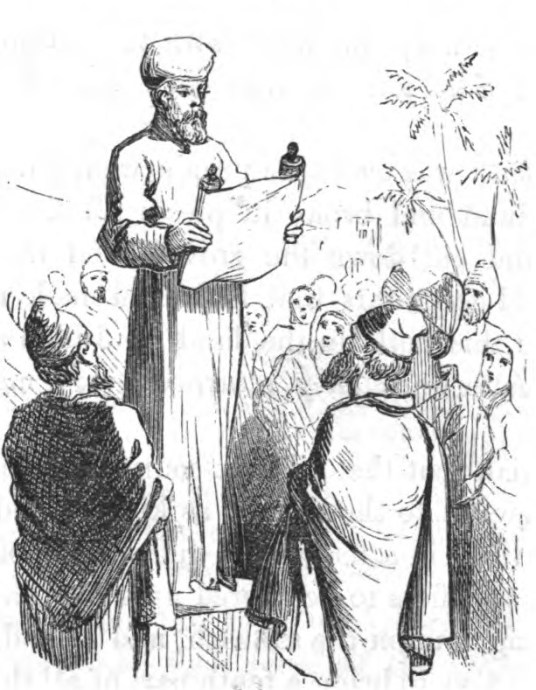
Today’s Reading – 1 Chronicles 6 (Click on the references to listen to the audio – Click here to view the passage from Blue Letter Bible)
(Second Milers Read – John 5 – 6; Psalms 31 – 35; Proverbs 7)
Read the “0507 Evening and Morning” devotion for today, by the late Charles Haddon Spurgeon
“The sons of Levi; Gershon, Kohath, and Merari.” (1Chronicles 6:1)
Good morning. In our reading today we see the descendants of Levi. These were the priests of the nation of Israel. Levi was the third son of Jacob. Levi would be scattered throughout Israel, but not as a punishment. God would choose this tribe to take care of the Tabernacle for Him.
“And Jacob called unto his sons, and said, Gather yourselves together, that I may tell you that which shall befall you in the last days. Gather yourselves together, and hear, ye sons of Jacob; and hearken unto Israel your father. Reuben, thou art my firstborn, my might, and the beginning of my strength, the excellency of dignity, and the excellency of power: Unstable as water, thou shalt not excel; because thou wentest up to thy father’s bed; then defiledst thou it: he went up to my couch. Simeon and Levi are brethren; instruments of cruelty are in their habitations. O my soul, come not thou into their secret; unto their assembly, mine honour, be not thou united: for in their anger they slew a man, and in their selfwill they digged down a wall. Cursed be their anger, for it was fierce; and their wrath, for it was cruel: I will divide them in Jacob, and scatter them in Israel.” (Genesis 49:1-7)
“But the Levites after the tribe of their fathers were not numbered among them. For the LORD had spoken unto Moses, saying, Only thou shalt not number the tribe of Levi, neither take the sum of them among the children of Israel: But thou shalt appoint the Levites over the tabernacle of testimony, and over all the vessels thereof, and over all things that belong to it: they shall bear the tabernacle, and all the vessels thereof; and they shall minister unto it, and shall encamp round about the tabernacle. And when the tabernacle setteth forward, the Levites shall take it down: and when the tabernacle is to be pitched, the Levites shall set it up: and the stranger that cometh nigh shall be put to death. And the children of Israel shall pitch their tents, every man by his own camp, and every man by his own standard, throughout their hosts. But the Levites shall pitch round about the tabernacle of testimony, that there be no wrath upon the congregation of the children of Israel: and the Levites shall keep the charge of the tabernacle of testimony. And the children of Israel did according to all that the LORD commanded Moses, so did they.” (Numbers 1:47-54)
What did Levi do to make his dad, Jacob, to say what he did? It is told in Genesis chapter 34…
“And Dinah the daughter of Leah, which she bare unto Jacob, went out to see the daughters of the land. And when Shechem the son of Hamor the Hivite, prince of the country, saw her, he took her, and lay with her, and defiled her. And his soul clave unto Dinah the daughter of Jacob, and he loved the damsel, and spake kindly unto the damsel. And Shechem spake unto his father Hamor, saying, Get me this damsel to wife. And Jacob heard that he had defiled Dinah his daughter: now his sons were with his cattle in the field: and Jacob held his peace until they were come. And Hamor the father of Shechem went out unto Jacob to commune with him. And the sons of Jacob came out of the field when they heard it: and the men were grieved, and they were very wroth, because he had wrought folly in Israel in lying with Jacob’s daughter; which thing ought not to be done. And Hamor communed with them, saying, The soul of my son Shechem longeth for your daughter: I pray you give her him to wife. And make ye marriages with us, and give your daughters unto us, and take our daughters unto you. And ye shall dwell with us: and the land shall be before you; dwell and trade ye therein, and get you possessions therein. And Shechem said unto her father and unto her brethren, Let me find grace in your eyes, and what ye shall say unto me I will give. Ask me never so much dowry and gift, and I will give according as ye shall say unto me: but give me the damsel to wife. And the sons of Jacob answered Shechem and Hamor his father deceitfully, and said, because he had defiled Dinah their sister: And they said unto them, We cannot do this thing, to give our sister to one that is uncircumcised; for that were a reproach unto us: But in this will we consent unto you: If ye will be as we be, that every male of you be circumcised; Then will we give our daughters unto you, and we will take your daughters to us, and we will dwell with you, and we will become one people. But if ye will not hearken unto us, to be circumcised; then will we take our daughter, and we will be gone. And their words pleased Hamor, and Shechem Hamor’s son. And the young man deferred not to do the thing, because he had delight in Jacob’s daughter: and he was more honourable than all the house of his father. And Hamor and Shechem his son came unto the gate of their city, and communed with the men of their city, saying, These men are peaceable with us; therefore let them dwell in the land, and trade therein; for the land, behold, it is large enough for them; let us take their daughters to us for wives, and let us give them our daughters. Only herein will the men consent unto us for to dwell with us, to be one people, if every male among us be circumcised, as they are circumcised. Shall not their cattle and their substance and every beast of theirs be ours? only let us consent unto them, and they will dwell with us. And unto Hamor and unto Shechem his son hearkened all that went out of the gate of his city; and every male was circumcised, all that went out of the gate of his city. And it came to pass on the third day, when they were sore, that two of the sons of Jacob, Simeon and Levi, Dinah’s brethren, took each man his sword, and came upon the city boldly, and slew all the males. And they slew Hamor and Shechem his son with the edge of the sword, and took Dinah out of Shechem’s house, and went out. The sons of Jacob came upon the slain, and spoiled the city, because they had defiled their sister. They took their sheep, and their oxen, and their asses, and that which was in the city, and that which was in the field, And all their wealth, and all their little ones, and their wives took they captive, and spoiled even all that was in the house. And Jacob said to Simeon and Levi, Ye have troubled me to make me to stink among the inhabitants of the land, among the Canaanites and the Perizzites: and I being few in number, they shall gather themselves together against me, and slay me; and I shall be destroyed, I and my house. And they said, Should he deal with our sister as with an harlot?” (Genesis 34:1-31)
So what can we take away from this history of the Levites? It doesn’t matter what you have done, the LORD can still use you. So don’t be kicking yourself because of what you’ve done. Receive His forgiveness, and allow Him to use you as He sees fit. Remember you are His creation, and He died for your sins.
Peace.
Posted in Devotions by Pastor Ted Stahl with 1 comment.
Right Makes Might (but only if you do it 100%) – The Saturday Morning Post

Today’s Passage – 2 Kings 13 – 15 (Click on the references to listen to the audio – Click here to view the passage from Blue Letter Bible)
(Second Milers Read – Luke 15 – 16; Proverbs 30 – 31; Psalms 146 – 150)
Read the “0430 Evening and Morning” devotion for today, by the late Charles Haddon Spurgeon
“In the second year of Joash son of Jehoahaz king of Israel reigned Amaziah the son of Joash king of Judah. He was twenty and five years old when he began to reign, and reigned twenty and nine years in Jerusalem. And his mother’s name was Jehoaddan of Jerusalem. And he did that which was right in the sight of the LORD, yet not like David his father: he did according to all things as Joash his father did. Howbeit the high places were not taken away: as yet the people did sacrifice and burnt incense on the high places.” (2Kings 14:1-4)
“In the twenty and seventh year of Jeroboam king of Israel began Azariah son of Amaziah king of Judah to reign. Sixteen years old was he when he began to reign, and he reigned two and fifty years in Jerusalem. And his mother’s name was Jecholiah of Jerusalem. And he did that which was right in the sight of the LORD, according to all that his father Amaziah had done; Save that the high places were not removed: the people sacrificed and burnt incense still on the high places.” (2Kings 15:1-4)
“In the second year of Pekah the son of Remaliah king of Israel began Jotham the son of Uzziah king of Judah to reign. Five and twenty years old was he when he began to reign, and he reigned sixteen years in Jerusalem. And his mother’s name was Jerusha, the daughter of Zadok. And he did that which was right in the sight of the LORD: he did according to all that his father Uzziah had done. Howbeit the high places were not removed: the people sacrificed and burned incense still in the high places. He built the higher gate of the house of the LORD.” (2Kings 15:32-35)
Good morning. Three kings in our reading today did what was right in the sight of the LORD. But, they did not remove the high places. The people would still sin by offering sacrifices and burning incense to their false gods. If we are going to do something right for the LORD, we need to do it 100%. Look at Moses…
“And the LORD spake unto Moses, saying, Take the rod, and gather thou the assembly together, thou, and Aaron thy brother, and speak ye unto the rock before their eyes; and it shall give forth his water, and thou shalt bring forth to them water out of the rock: so thou shalt give the congregation and their beasts drink. And Moses took the rod from before the LORD, as he commanded him. And Moses and Aaron gathered the congregation together before the rock, and he said unto them, Hear now, ye rebels; must we fetch you water out of this rock? And Moses lifted up his hand, and with his rod he smote the rock twice: and the water came out abundantly, and the congregation drank, and their beasts also. And the LORD spake unto Moses and Aaron, Because ye believed me not, to sanctify me in the eyes of the children of Israel, therefore ye shall not bring this congregation into the land which I have given them.” (Numbers 20:7-12)
Moses disobeyed God by hitting the rock with his staff instead of just speaking to the rock. This act kept him from entering the promised land.
Because the 3 kings did not remove the high places, the people sinned by offering sacrifices, and burning incense. Only the priests were to offer up the sacrifices, and burn incense.
“And Nadab and Abihu, the sons of Aaron, took either of them his censer, and put fire therein, and put incense thereon, and offered strange fire before the LORD, which he commanded them not. And there went out fire from the LORD, and devoured them, and they died before the LORD.” (Leviticus 10:1-2)
Even Saul, the first king of Israel, messed up, by not doing things God’s way…
“And he tarried seven days, according to the set time that Samuel had appointed: but Samuel came not to Gilgal; and the people were scattered from him. And Saul said, Bring hither a burnt offering to me, and peace offerings. And he offered the burnt offering. And it came to pass, that as soon as he had made an end of offering the burnt offering, behold, Samuel came; and Saul went out to meet him, that he might salute him. And Samuel said, What hast thou done? And Saul said, Because I saw that the people were scattered from me, and that thou camest not within the days appointed, and that the Philistines gathered themselves together at Michmash; Therefore said I, The Philistines will come down now upon me to Gilgal, and I have not made supplication unto the LORD: I forced myself therefore, and offered a burnt offering. And Samuel said to Saul, Thou hast done foolishly: thou hast not kept the commandment of the LORD thy God, which he commanded thee: for now would the LORD have established thy kingdom upon Israel for ever. But now thy kingdom shall not continue: the LORD hath sought him a man after his own heart, and the LORD hath commanded him to be captain over his people, because thou hast not kept that which the LORD commanded thee.” (1Samuel 13:8-14)
Moses lost his chance to go into the promised land. Aaron’s sons lost their lives. King Saul lost the kingdom. What did Jesus say was the first and greatest commandment?
“And one of the scribes came, and having heard them reasoning together, and perceiving that he had answered them well, asked him, Which is the first commandment of all? And Jesus answered him, The first of all the commandments is, Hear, O Israel; The Lord our God is one Lord: And thou shalt love the Lord thy God with all thy heart, and with all thy soul, and with all thy mind, and with all thy strength: this is the first commandment.” (Mark 12:28-30)
Does right make might? Only when it’s done how the LORD wants it.
Peace.
Posted in Devotions by Pastor Ted Stahl with 2 comments.
How To Start A Fire – The Saturday Morning Post

Today’s Passage – 1 Kings 18 – 19 (Click on the references to listen to the audio – Click here to view the passage from Blue Letter Bible)
(Second Milers also read – Luke 1 – 2; Proverbs 23; Psalms 111 – 115
Read the “0423 Evening and Morning” devotion for today, by the late Charles Haddon Spurgeon
“And it came to pass at the time of the offering of the evening sacrifice, that Elijah the prophet came near, and said, LORD God of Abraham, Isaac, and of Israel, let it be known this day that thou art God in Israel, and that I am thy servant, and that I have done all these things at thy word. Hear me, O LORD, hear me, that this people may know that thou art the LORD God, and that thou hast turned their heart back again. Then the fire of the LORD fell, and consumed the burnt sacrifice, and the wood, and the stones, and the dust, and licked up the water that was in the trench. And when all the people saw it, they fell on their faces: and they said, The LORD, he is the God; the LORD, he is the God.” (1Kings18:36-39)
Good morning. Today we’re going to learn how to get fire with two sticks and some dried grass, or leaves. Take a long, straight stick and carve a point at one end. Take the other piece of wood and carve a small round gully for the pointy stick to fit in. On one of the sides of the gully, carve a small triangle out (this allows oxygen in). Now place the point into the gully and using a downward motion, with the straight sick in your palms, rub your hands together rolling the stick to create friction. Soon you will see smoke appear. Keep going until you can see a spark glowing. Add some of the dried grass and gently blow on the ember and the grass should ignite. Add more leaves, dried grass, and wood to keep the fire going. Anybody can use this method, it just takes a little work.
Here is another way to start a fire. If you are saved and backslide then you know how miserable your life can be. Yet there is that small spark within you that keeps trying to call you back. It takes work, but you can do it if you want to. You have friction going between your spirit and your flesh. God sent Elijah to meet with Ahab, and there was friction.
“And it came to pass, when Ahab saw Elijah, that Ahab said unto him, Art thou he that troubleth Israel? And he answered, I have not troubled Israel; but thou, and thy father’s house, in that ye have forsaken the commandments of the LORD, and thou hast followed Baalim.” (1Kings 18:17-18)
Now you need some kindling. Wood, hay, and stubble are good to burn. In Elijah’s case: the prophets of Baal. All they did was cause all but 7000 Israelites to bow their knee to Baal. Isn’t that what sin does to you: causes you to turn away from God? Good sent the spark (or fire from heaven) that was an answer to Elijah’s prayer.
“And it came to pass at the time of the offering of the evening sacrifice, that Elijah the prophet came near, and said, LORD God of Abraham, Isaac, and of Israel, let it be known this day that thou art God in Israel, and that I am thy servant, and that I have done all these things at thy word. “Hear me, O LORD, hear me, that this people may know that thou art the LORD God, and that thou hast turned their heart back again. Then the fire of the LORD fell, and consumed the burnt sacrifice, and the wood, and the stones, and the dust, and licked up the water that was in the trench. And when all the people saw it, they fell on their faces: and they said, The LORD, he is the God; the LORD, he is the God. And Elijah said unto them, Take the prophets of Baal; let not one of them escape. And they took them: and Elijah brought them down to the brook Kishon, and slew them there.” (1Kings 18:37-40)
Empowered by God, Elijah was able to rid Israel of the 400 prophets of Baal. Now God could bless. Just like you looked for that small spark, Elijah was looking for a blessing from God.
“And Elijah said unto Ahab, Get thee up, eat and drink; for there is a sound of abundance of rain. So Ahab went up to eat and to drink. And Elijah went up to the top of Carmel; and he cast himself down upon the earth, and put his face between his knees, And said to his servant, Go up now, look toward the sea. And he went up, and looked, and said, There is nothing. And he said, Go again seven times. And it came to pass at the seventh time, that he said, Behold, there ariseth a little cloud out of the sea, like a man’s hand. And he said, Go up, say unto Ahab, Prepare thy chariot, and get thee down, that the rain stop thee not. And it came to pass in the mean while, that the heaven was black with clouds and wind, and there was a great rain. And Ahab rode, and went to Jezreel. And the hand of the LORD was on Elijah; and he girded up his loins, and ran before Ahab to the entrance of Jezreel.” (1Kings 18:41-46)
Remember when you backslide, it only takes a little effort on your part to allow the Lord to start the fire in you again.
Peace!
Posted in Devotions by Pastor Ted Stahl with 4 comments.
When God Moves In

Today’s Passage – 1 Kings 8 – 9 (Click on the references to listen to the audio – Click here to view the passage from Blue Letter Bible)
(Second Milers also read – Mark 9 – 10; Proverbs 19; Psalms 91 – 95
Listen to this morning’s Scripture song – Psalm 92:1 – 4
Read the “0419 Evening and Morning” devotion for today, by the late Charles Haddon Spurgeon
“And it came to pass, when the priests were come out of the holy place, that the cloud filled the house of the LORD, So that the priests could not stand to minister because of the cloud: for the glory of the LORD had filled the house of the LORD.” – (1 Kings 8:10-11)
As we study Israel’s history, we know that there were many times that they were not where God wanted them to be, spiritually speaking. Often in their history Israel would forsake their God, and err into immorality, and idolatry. These were times when God would be forced to bring judgment upon His people in order to get them to turn back to Him. However, in today’s passage, we see Israel as right with the Lord as they had ever been. They had just completed building the Temple of God, and today was the day that the entire nation was gathered together in order to dedicate the temple (and themselves) to the Lord. God was well pleased with Israel at this time, and He demonstrated His approval with a physical appearance of his presence. Verse 11 tells us that “the glory of the Lord had filled the house of the Lord”.
I have been saved for over thirty years now, and I have been involved in the local church since I was born-again into the family of God; and I have experienced the wonderful blessing of seeing God’s presence in the midst of His church. I did not see a physical manifestation of His presence, as these Israelites did, but I did experience the glory of God, nonetheless. Unfortunately, I have also seen the times when God’s presence was apparently absent from our church. Hindsight often provides a better perspective for analyzing the ingredients that went into the times when God seemed to be all over His church. When I look back at the times in our ministry when God was really working in a marvelous way among us, with many being saved and baptized, and wonderful Spirit-filled services, I can see that there were specific ingredients that were present. These same ingredients were present in our text today.
1 There was unity – God wants His children to be “in one accord”. A quick study of the early church from the Book of Acts will reveal that they were all together; they were all moving in the same direction.
2 There was humility – Notice in Solomon’s prayer that He recognizes that the people were prone to get away from God. He admits completely that these people were in God’s hands, and that it was God that blessed them. Notice:
“If they sin against thee, (for there is no man that sinneth not,) and thou be angry with them, and deliver them to the enemy, so that they carry them away captives unto the land of the enemy, far or near; … Then hear thou their prayer and their supplication in heaven thy dwelling place, and maintain their cause, And forgive thy people that have sinned against thee, and all their transgressions wherein they have transgressed against thee, and give them compassion before them who carried them captive, that they may have compassion on them:” – (1 Kings 8:46, 49-50)
3 There was complete tenacity and loyalty toward God. These people were all consecrated to the Lord. They were not doing that which was right in their own eyes, they were pursuing God. They were not chasing after the world with all of its idols, and all of its immorality. They were not only separated from the world, but they were also separated unto the Lord. These people wanted to please the Lord. They were focused on God. They gave up two weeks of their lives to serve and sacrifice to the Lord.
We can see God’s glory in our churches again today if we have these three ingredients in place. I want to see God move in our church. I want to see Him do great thing in the midst of this world that denies Him. He’s just waiting for us to get on board.
Posted in Thoughts from 1 Kings by Phil Erickson with 3 comments.
Use Your Gifts for the Lord

Today’s Passage – 1 Kings 6 – 7 (Click on the references to listen to the audio – Click here to view the passage from Blue Letter Bible)
(Second Milers also read – Mark 7 – 8; Proverbs 18; Psalms 86 – 90)
Listen to this morning’s Scripture song – Psalm 92:1 – 4
Read the “0418 Evening and Morning” devotion for today, by the late Charles Haddon Spurgeon
“And king Solomon sent and fetched Hiram out of Tyre. He was a widow’s son of the tribe of Naphtali, and his father was a man of Tyre, a worker in brass: and he was filled with wisdom, and understanding, and cunning to work all works in brass. And he came to king Solomon, and wrought all his work.” – (1 Kings 7:13-14)
Not every Christian is gifted by God to be a teacher or a preacher. In this passage, we see Hiram, a man from Tyre, who was uniquely gifted by God to make all of the works of brass that were to be used in the Temple. Back in the Book of Exodus, we saw two other fellows. Bezaleel and Aholiab, who were also uniquely filled with wisdom (gifted) to build the Tabernacle in the Wilderness. As far as we know, these men never taught the Scriptures; they were not priests, or prophets; but they were greatly used of the Lord.
We have many people in our churches today who have also been uniquely crafted by the Lord to fulfill His purpose. They may be builders, like the men referenced above. They may be men or women that have a knack for cleaning, or landscaping. These are all very necessary and important jobs in the service of our churches today. As I read this passage today, I thought of a man in our church who was used of the Lord to build our platform in the auditorium along with the sound booth. He did a wonderful job, and our church building is much more beautiful and functional as a result of his using his gifts for the Lord. We also have some folks in our church that like to cook, and when we have a dinner of some kind, these people go to work, preparing delicious food for the rest of us to enjoy. They work mostly behind the scenes, but their work is very important to the Lord.
God tells us in 1 Corinthians 12:
“But now hath God set the members every one of them in the body, as it hath pleased him.” – (1 Corinthians 12:18)
Not every member is an eye or an ear: some are hands, some are feet. Not everybody is a preacher or teacher; and those that are gifted in areas other that teaching are just as important to the work of the ministry as those who teach or preach.
What is your gift? What is your sweet spot? The thing that you were born to do. Hiram was born to make brass, and he did it very well. God will be well pleased with your life if you find the thing that He has equipped you to do, and then do it for His glory.
Posted in Devotions by Phil Erickson with 3 comments.
The Biggest Loser – The Saturday Morning Post
Today’s Passage – 1 Kings 1 – 2 (Click on the references to listen to the audio – Click here to view the passage from Blue Letter Bible)
(Second Milers also read – Mark 3 – 4 ; Proverbs 16; Psalms 76 – 80)
Read the “0416 Evening and Morning” devotion for today, by the late Charles Haddon Spurgeon.
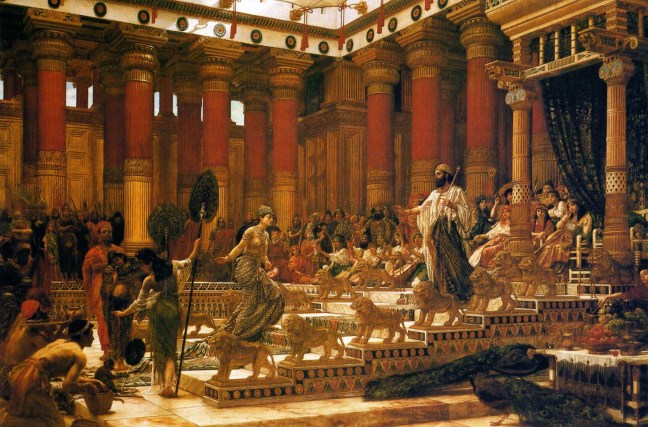
“Now the days of David drew nigh that he should die; and he charged Solomon his son, saying, I go the way of all the earth: be thou strong therefore, and shew thyself a man; And keep the charge of the LORD thy God, to walk in his ways, to keep his statutes, and his commandments, and his judgments, and his testimonies, as it is written in the law of Moses, that thou mayest prosper in all that thou doest, and whithersoever thou turnest thyself: That the LORD may continue his word which he spake concerning me, saying, If thy children take heed to their way, to walk before me in truth with all their heart and with all their soul, there shall not fail thee (said he) a man on the throne of Israel.” (1Ki 2:1-4)
Good morning. Here, King David tells his son to be strong, and show himself a man. He should walk in God’s ways, keep His statutes, His commandments, judgments, and His testimonies. Why? That he would prosper. And Solomon did. He built the temple to God in Jerusalem: a grand, and beautiful, temple. And King Solomon was doing okay, until…
“But king Solomon loved many strange women, together with the daughter of Pharaoh, women of the Moabites, Ammonites, Edomites, Zidonians, and Hittites; Of the nations concerning which the LORD said unto the children of Israel, Ye shall not go in to them, neither shall they come in unto you: for surely they will turn away your heart after their gods: Solomon clave unto these in love. And he had seven hundred wives, princesses, and three hundred concubines: and his wives turned away his heart. For it came to pass, when Solomon was old, that his wives turned away his heart after other gods: and his heart was not perfect with the LORD his God, as was the heart of David his father. For Solomon went after Ashtoreth the goddess of the Zidonians, and after Milcom the abomination of the Ammonites. And Solomon did evil in the sight of the LORD, and went not fully after the LORD, as did David his father. Then did Solomon build an high place for Chemosh, the abomination of Moab, in the hill that is before Jerusalem, and for Molech, the abomination of the children of Ammon. And likewise did he for all his strange wives, which burnt incense and sacrificed unto their gods.” (1Kings 1:1-8)
And what is the first and greatest commandment?
“Then one of them, which was a lawyer, asked him a question, tempting him, and saying, Master, which is the great commandment in the law? Jesus said unto him, Thou shalt love the Lord thy God with all thy heart, and with all thy soul, and with all thy mind. This is the first and great commandment.” (Mat 22:35-38)
Solomon could not love God with all his heart, soul, and mind, if he was worshiping other gods: the gods of his strange wives. And God, being true to His Word, when Rehoboam was coming to replace his dad (Solomon), then God split the kingdom…
“And the king answered the people roughly, and forsook the old men’s counsel that they gave him; And spake to them after the counsel of the young men, saying, My father made your yoke heavy, and I will add to your yoke: my father also chastised you with whips, but I will chastise you with scorpions. Wherefore the king hearkened not unto the people; for the cause was from the LORD, that he might perform his saying, which the LORD spake by Ahijah the Shilonite unto Jeroboam the son of Nebat. So when all Israel saw that the king hearkened not unto them, the people answered the king, saying, What portion have we in David? neither have we inheritance in the son of Jesse: to your tents, O Israel: now see to thine own house, David. So Israel departed unto their tents. But as for the children of Israel which dwelt in the cities of Judah, Rehoboam reigned over them. Then king Rehoboam sent Adoram, who was over the tribute; and all Israel stoned him with stones, that he died. Therefore king Rehoboam made speed to get him up to his chariot, to flee to Jerusalem. So Israel rebelled against the house of David unto this day. And it came to pass, when all Israel heard that Jeroboam was come again, that they sent and called him unto the congregation, and made him king over all Israel: there was none that followed the house of David, but the tribe of Judah only.” (1Ki 12:13-20)
And later the tribe of Benjamin.
Solomon was the biggest loser. If he would have stuck to God’s plan, Solomon may have reigned another 40 years. What about you? Are you living exclusively for the LORD? Maybe there are strange gods that have crept into your life. Show yourself a man (or woman) and stand firm for the LORD. You’ll be glad you did.
Peace.
Posted in Devotions by Pastor Ted Stahl with 2 comments.
Bittersweet

Today’s Passage – 2 Samuel 18 – 19 (Click on the references to listen to the audio – Click here to view the passage from Blue Letter Bible)
Second Milers also read – Matthew 25 – 26; Psalms 61 – 65; Proverbs 13
Listen to this morning’s Scripture song – Psalm 47:1
Read the “0413 Evening and Morning” devotion for today, by the late Charles Haddon Spurgeon.
“And the victory that day was turned into mourning unto all the people: for the people heard say that day how the king was grieved for his son.” – (2 Samuel 19:2)
This was a “no win” situation for David. David won the nation back, but lost his son. After his son Absalom rebelled against David, and forced him to flee from Jerusalem with all of his men, David had to do something. Absalom certainly wanted to see his father dead; but David, however, wanted somehow to undo the damage that Absalom had done to the nation, and still keep him as a son. He asked his men in the final battle to “deal gently… with the young man”, which they did not do. The men were right. Absalom had to die. David should have realized that. I can understand, though, how David felt. He did not blame Absalom for the way he turned out. I think David blamed himself. And even though David and his men won the victory and got the kingdom back, he still wished that he could go back and re-do some things with his son Absalom.
I can relate to that. I wish that I could go back and re-do some things with my family as well. I know one thing that I would change is that I would give each one of them a little more of my time. Instead of consuming my life with my goals and ambitions, I would give a little more of myself to helping them reach theirs. David ignored his son Absalom for a long time, and now he wished that he had the opportunity to give him his attention. The rebellion of Absalom grew with every passing day that his father neglected him. Most of my children are grown now, but I am trying to spend more time with them even now. I cannot re-claim what I missed, but I can make the most of what I have left. I do have one daughter, Hannah, who is young and still at home. I am doing things differently with her. If you still have children to influence, I encourage you to take every opportunity to do it. I bet you if David was to do it all over again, he would trade some of his successes as king for a better relationship with his children.
Posted in Thoughts from 2 Samuel by Phil Erickson with 5 comments.
20/20 Vision – The Saturday Morning Post

Today’s Passage – 2 Samuel 4 – 7 (Click on the references to listen to the audio – Click here to view the passage from Blue Letter Bible)
(Second Milers also read – Matthew 17 – 18; Proverbs 9; Psalms 41 – 45)
Read the “0409 Evening and Morning” devotion for today, by the late Charles Haddon Spurgeon.
“And Jonathan, Saul’s son, had a son that was lame of his feet. He was five years old when the tidings came of Saul and Jonathan out of Jezreel, and his nurse took him up, and fled: and it came to pass, as she made haste to flee, that he fell, and became lame. And his name was Mephibosheth.” (2Samuel 4:4)
Good morning. Mephibosheth was Jonathan’s son, Saul’s grandson. He was lame in his feet. It wasn’t his fault that he was lame. When he was 5 years old, his nurse picked him up to flee the city. As they were fleeing, she dropped him, and he became lame. Many people are lame in some way or another. They could be mentally, or physically lame. Did you know that 75% of adults in America use some kind of devise to correct their vision? Seventy-five percent. I guess not everyone has 20/20 vision. How do you feel about defective people? Do you look down on them? Do they upset you. My father-in-law got around okay, without legs, in his wheelchair. For the five years I was at Texas Baptist College, I took care of a great bunch of guys in Sunday School: the Sonshine Class. They were mentally challenged, but they still could learn about Jesus. Like I said before, you could be mentally or physically lame. The Sonshine Class helped me move across the street into another house. It wasn’t the smoothest move, but we all enjoyed pizza afterwards. My special verse says…
“These things I have spoken unto you, that in me ye might have peace. In the world ye shall have tribulation: but be of good cheer; I have overcome the world.” (John 16:33)
Everyone will have tribulation in the world. This tribulation my come as a defect. I had an extra nerve string in my heart that sent it a signal to beat faster. Now I have a built in diphibulator and my beats, and also my blood pressure are normal. We can learn something through our defects, and the defects of others. There are men in the Bible who were defective.
“And as Jesus passed by, he saw a man which was blind from his birth. And his disciples asked him, saying, Master, who did sin, this man, or his parents, that he was born blind? Jesus answered, Neither hath this man sinned, nor his parents: but that the works of God should be made manifest in him. I must work the works of him that sent me, while it is day: the night cometh, when no man can work. As long as I am in the world, I am the light of the world. When he had thus spoken, he spat on the ground, and made clay of the spittle, and he anointed the eyes of the blind man with the clay, And said unto him, Go, wash in the pool of Siloam, (which is by interpretation, Sent.) He went his way therefore, and washed, and came seeing.” (John 9:1-7)
Was it the man’s fault that he was born blind? Was it because of the sins of the parents? No. God made him that way so the works of God could be manifested in him. Everybody has something to offer, even though they may have a defect. We can still learn from them. And not just them, everybody.
Peace.
Posted in Devotions by Pastor Ted Stahl with 2 comments.
What Are You Listening To? – The Saturday Morning Post

Today’s Passage – 1 Samuel 15 – 16 (Click on the references to listen to the audio – Click here to view the passage from Blue Letter Bible)
(Second Milers also read – Matthew 3 – 4; Proverbs 2; Psalms 6 – 10)
Read the “0402 Evening and Morning” devotion for today, by the late Charles Haddon Spurgeon.
“But the Spirit of the LORD departed from Saul, and an evil spirit from the LORD troubled him. And Saul’s servants said unto him, Behold now, an evil spirit from God troubleth thee. Let our lord now command thy servants, which are before thee, to seek out a man, who is a cunning player on an harp: and it shall come to pass, when the evil spirit from God is upon thee, that he shall play with his hand, and thou shalt be well. And Saul said unto his servants, Provide me now a man that can play well, and bring him to me. Then answered one of the servants, and said, Behold, I have seen a son of Jesse the Bethlehemite, that is cunning in playing, and a mighty valiant man, and a man of war, and prudent in matters, and a comely person, and the LORD is with him. Wherefore Saul sent messengers unto Jesse, and said, Send me David thy son, which is with the sheep. And Jesse took an ass laden with bread, and a bottle of wine, and a kid, and sent them by David his son unto Saul. And David came to Saul, and stood before him: and he loved him greatly; and he became his armourbearer. And Saul sent to Jesse, saying, Let David, I pray thee, stand before me; for he hath found favour in my sight. And it came to pass, when the evil spirit from God was upon Saul, that David took an harp, and played with his hand: so Saul was refreshed, and was well, and the evil spirit departed from him.” (1Samuel 16:14-23)
Good morning. I got saved late in life, so I have a lot of ‘baggage’ with me. One of those bags is music. In our passage today, we see that Saul was oppressed by an evil spirit. But when David played, Saul was refreshed. He felt better, and the evil spirit left him. Back in my day, music could say one thing when played normally and say another thing if it were played backwards. This was called backward masking. Now, if a singer wants to say something, they blurt it right out.
I could not find the correct live version of When Electricity Came To Arkansas by Black Oak Arkansas. When played forward, in the middle of the song, it sounds like the lead singer is speaking in tongues. However, when you play it backwards you can clearly hear the singer say, “satan, satan. He is god, he is god, he is god.”
Even the Beatles used backward masking. But they also said things straight out. In their song: The Ballad Of John and Yoko, they used the LORD’s name in vain five times.
Norm Greenbaum, in his song Spirit In The Sky, said, “I’ve never been a sinner, I’ve never sinned. I have friend in Jesus.” But the Bible clearly says that…”
“For all have sinned, and come short of the glory of God…” (Romans 3:23)
That’s everybody. These are only three of the songs I remember from my generation. There are others. Black Sabbath has a song called After Forever. Here is the first verse…
Have you ever though about your soul
Can it be saved?
Or perhaps you think that when you’re dead
You just stay in your grave
Is God just a thought within your head
Or is he a part of you?
Is Christ just a name that you read in a book
When you were at school?
And to song ends with this statement…
Yes, I think it’s too late.
It’s never too late, unless you close your eyes in death without Jesus as your Saviour. What are you listening to?
Peace.
Posted in Devotions by Pastor Ted Stahl with 2 comments.
Is Your House Secure? – The Saturday Morning Post

Today’s Passage – Judges 18 – 19 (Click on the references to listen to the audio – Click here to view the passage from Blue Letter Bible)
(Second Milers also read – Revelation 1 – 3; Proverbs 26; Psalms 126 – 130)
Read the “0326 Evening and Morning” devotion for today, by the late Charles Haddon Spurgeon.
“Then the five men departed, and came to Laish, and saw the people that were therein, how they dwelt careless, after the manner of the Zidonians, quiet and secure; and there was no magistrate in the land, that might put them to shame in any thing; and they were far from the Zidonians, and had no business with any man.” (Judges 18:7)
Good morning. In our readings today, we find the tribe of Dan out looking for some land. Five men were sent to spy the land that God had made for the tribe of Dan (Alright, I’ll stop rhyming!). As the band of five spies go, they come across the city of Laish. Here we find in verse 7 we find some facts about Laish…
1) The people of Laish dwelt careless. There was no army to defend the city. People could come and go as they please. They had no law, and no magistrate in the land to put them to shame. They thought themselves to be quiet and secure.
2) The people of Laish dwelt after the manner of the Zidonians. They worshipped false gods (Baal – 1Kings 16:31) and goddess’ (Ashtoreth – 1Kings 11:5).
3) The people of Laish dwelt in a state of being self-sufficient. They had nothing to do with any man, they relied on themselves.
And what happened?
“And they took the things which Micah had made, and the priest which he had, and came unto Laish, unto a people that were at quiet and secure: and they smote them with the edge of the sword, and burnt the city with fire. And there was no deliverer, because it was far from Zidon, and they had no business with any man; and it was in the valley that lieth by Bethrehob. And they built a city, and dwelt therein. And they called the name of the city Dan, after the name of Dan their father, who was born unto Israel: howbeit the name of the city was Laish at the first.” (Judges 18:27-29)
We have a Dan looking for us too…
“Be sober, be vigilant; because your adversary the devil, as a roaring lion, walketh about, seeking whom he may devour…” (1Peter 5:8)
1) Are you careless with your Christianity?
I’m saved now, why should I do anything else? God has already chosen who would get saved, so why do I have to witness? I do read my Bible sometimes. I even pray some times. Well, things come up and sometimes I miss a church service or two.
“Put on the whole armour of God, that ye may be able to stand against the wiles of the devil. For we wrestle not against flesh and blood, but against principalities, against powers, against the rulers of the darkness of this world, against spiritual wickedness in high places. Wherefore take unto you the whole armour of God, that ye may be able to withstand in the evil day, and having done all, to stand. Stand therefore, having your loins girt about with truth, and having on the breastplate of righteousness; And your feet shod with the preparation of the gospel of peace; Above all, taking the shield of faith, wherewith ye shall be able to quench all the fiery darts of the wicked. And take the helmet of salvation, and the sword of the Spirit, which is the word of God: Praying always with all prayer and supplication in the Spirit, and watching thereunto with all perseverance and supplication for all saints; And for me, that utterance may be given unto me, that I may open my mouth boldly, to make known the mystery of the gospel, For which I am an ambassador in bonds: that therein I may speak boldly, as I ought to speak.” (Ephesians 6:11- 20)
2) Are the things of this world drawing you away from God?
But my team is in the playoffs, and this is the first Sunday I missed in the past few weeks. I’ve worked hard all this week, and I need time to vegetate! But friends are coming over, and this is our card night. I have bought a piece of ground, and I must needs go and see it. I have bought five yoke of oxen, and I go to prove them. I married a wife, and therefore I cannot come.
“Love not the world, neither the things that are in the world. If any man love the world, the love of the Father is not in him. For all that is in the world, the lust of the flesh, and the lust of the eyes, and the pride of life, is not of the Father, but is of the world. And the world passeth away, and the lust thereof: but he that doeth the will of God abideth for ever.” (1John 2:15)
3) Are you self-sufficient?
I’d rather do things myself, that way they get done right the first time.
“I am the vine, ye are the branches: He that abideth in me, and I in him, the same bringeth forth much fruit: for without me ye can do nothing.” (John 15:5)
You can be careless, live worldly, and attempt to be self-sufficient, but your life will not amount to anything except the pile of dust it was made from.
“Lay not up for yourselves treasures upon earth, where moth and rust doth corrupt, and where thieves break through and steal: But lay up for yourselves treasures in heaven, where neither moth nor rust doth corrupt, and where thieves do not break through nor steal: For where your treasure is, there will your heart be also.” (Matthew 6:19-21)
Where is your heart? Where will you live in eternity? Is your house secure? Instead of pleasing ourselves, maybe it’s time to start pleasing God who holds the purpose for our lives in His hands.
“But without faith it is impossible to please him: for he that cometh to God must believe that he is, and that he is a rewarder of them that diligently seek him.” (Hebrews 11:6)
Peace.
Posted in Devotions by Pastor Ted Stahl with 3 comments.